Introduction
In the era of swift urban development, the concept of digital twins has surfaced as a transformative technological advancement poised to overhaul the planning, administration, and sustainability of smart cities. Digital twins are virtual replicas that mirror the physical characteristics and actions of tangible entities. Through consistent data collection on the operational status of physical infrastructure and subsequent data processing, digital twins enable seamless real-time synchronization between physical and digital realms. This synchronization, in turn, streamlines the management, optimization, and strategic decision-making processes for practical systems.
While digital twins hold great promise, their practical applications encounter several challenges and unresolved issues. These include ensuring the seamless integration of data from diverse sources to construct accurate and comprehensive digital twins, improving the fidelity and precision of digital twin models to capture real-world intricacies, developing scalable frameworks adaptable to the dynamic nature of physical systems, and fortifying digital twin edge networks and data against cybersecurity threats while upholding data privacy. Addressing these challenges requires interdisciplinary research and collaborative efforts. Specifically, the successful implementation of digital twins and the realization of smart cities depend on collaborative endeavors across various fields such as computer science, intelligent communication, manufacturing, robotics, and beyond. Thereby, a gathering is of high necessity to bring together various stakeholders, enabling them to exchange up-to-date knowledge and experiences.
Under the circumstances, we will use this project to organize a two-day symposium titled Digital Twin Research and Applications: Advancing Smart Cities for a Sustainable Future. This symposium aims to explore the multifaceted applications and complexities of integrating digital twins into diverse smart city applications. Through this two-day symposium, we plan to provide a collaborative platform for experts from academia, industry, and government to exchange ideas, share best practices, and foster interdisciplinary collaborations in advancing digital twin technologies. In detail, multiple keynote speeches will be delivered during this symposium to explore the diverse applications of digital twins in smart city infrastructure, transportation systems, energy management, environmental sustainability, and sixth-generation communication systems (6G). Moreover, industry practitioners will be invited to share their innovative solutions, testbeds, and perspectives on utilizing digital twins in smart city contexts. Furthermore, policymakers will be invited to share strategic insights during the event.
Throughout the project implementation, we plan to engage undergraduate students, research scholars, and faculty members from HKMU, HSUHK, and other institutions to participate. Doing so can be beneficial for fostering university students’ interest in conducting research based on the topics proposed in this project and developing multiple perspectives that will benefit students in their further studies and career aspirations. Furthermore, the topics covered in this symposium are essential components that could be integrated as new chapters within the curricula of related courses offered by the selffinancing universities. In summary, the goal of this project is to create a mutually beneficial environment for students, faculty, and stakeholders, paving the way for the successful implementation of digital twins in smart cities within Hong Kong.
Objectives
- To enhance the research capabilities of individual academic staff, especially junior faculty members, at both HKMU and HSUHK. This will help them broaden their research networks, improve their reputation, promote collaborations in funding applications, knowledge transfer, and exchanges, and make substantial contributions to their respective research fields. These advancements will equip staff members with the ability to transform their research findings and fresh insights into concrete enhancements within teaching and learning environments. Besides, digital twin-enabled teaching solutions are intended to be developed to deliver more innovative and effective educational experiences for students.
- To foster active involvement of undergraduate and postgraduate students in research endeavors, stimulating the exploration of new knowledge. This initiative will offer students valuable insights into both industrial and academic realms, helping them figure out clear career pathways and enhancing their capacity to serve society effectively. Through engaging in these activities, students will broaden their horizons, gain a deeper understanding of digital twins in smart cities, and position themselves as standout individuals in the upcoming era of intelligence. By doing so, we aim to lay a robust foundation for nurturing the next generation of technology leaders and innovators in Hong Kong.
- To encourage increased collaboration among the government, academia, and industry from Hong Kong, the Greater Bay Area (GBA), and overseas countries by engaging in collaborative research on computer science, intelligent communications, manufacturing, robotics and beyond. These collaborations will be advantageous in not only facilitating the practical implementation of digital twins in real systems but also in driving innovation and advancements in these fields. Moreover, they will play a pivotal role in fostering technology transfer and commercialization through transforming academic achievements and incubating start-up companies.
Key Topics
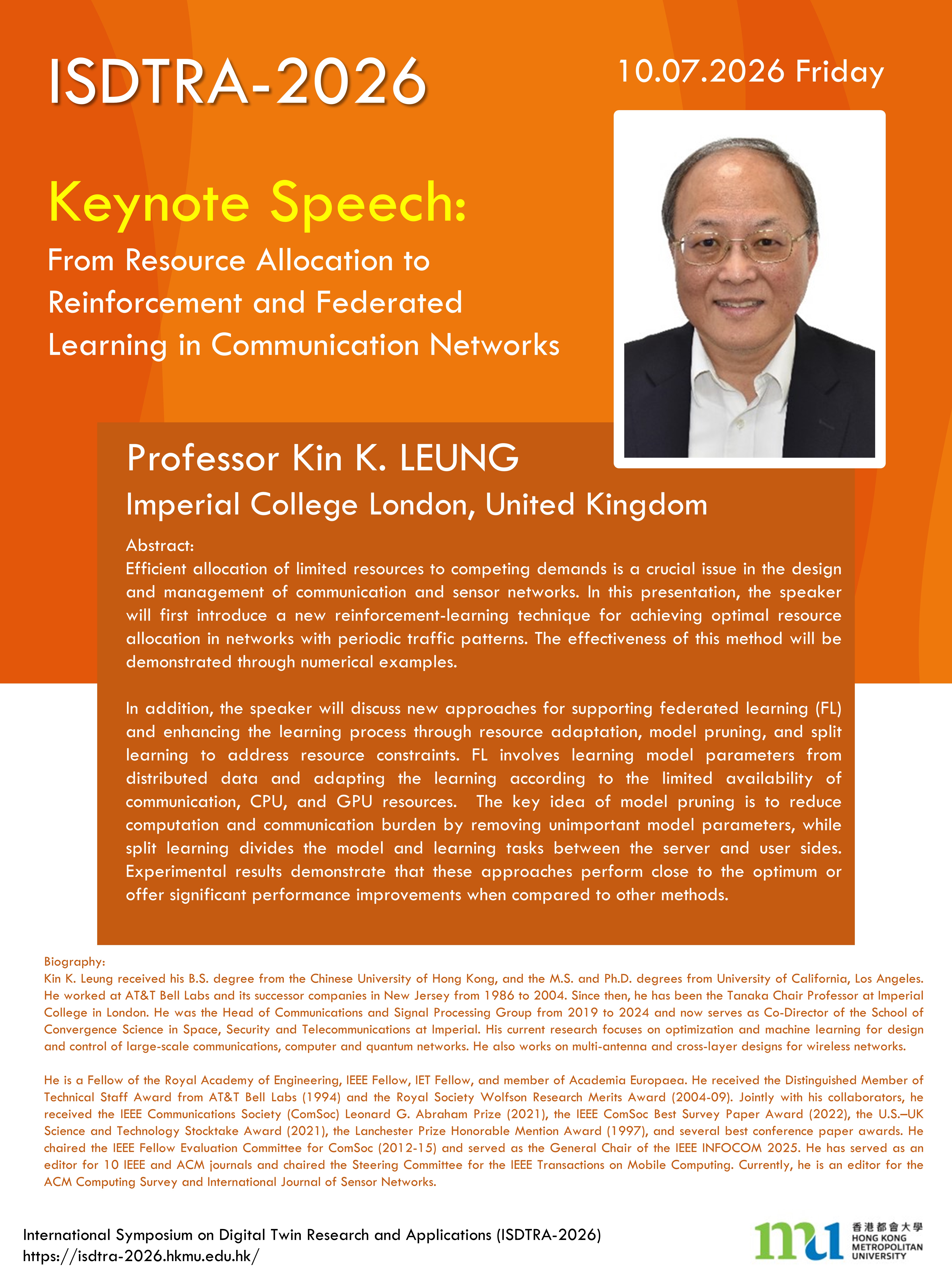
- From Resource Allocation to Reinforcement and Federated Learning in Communication Networks
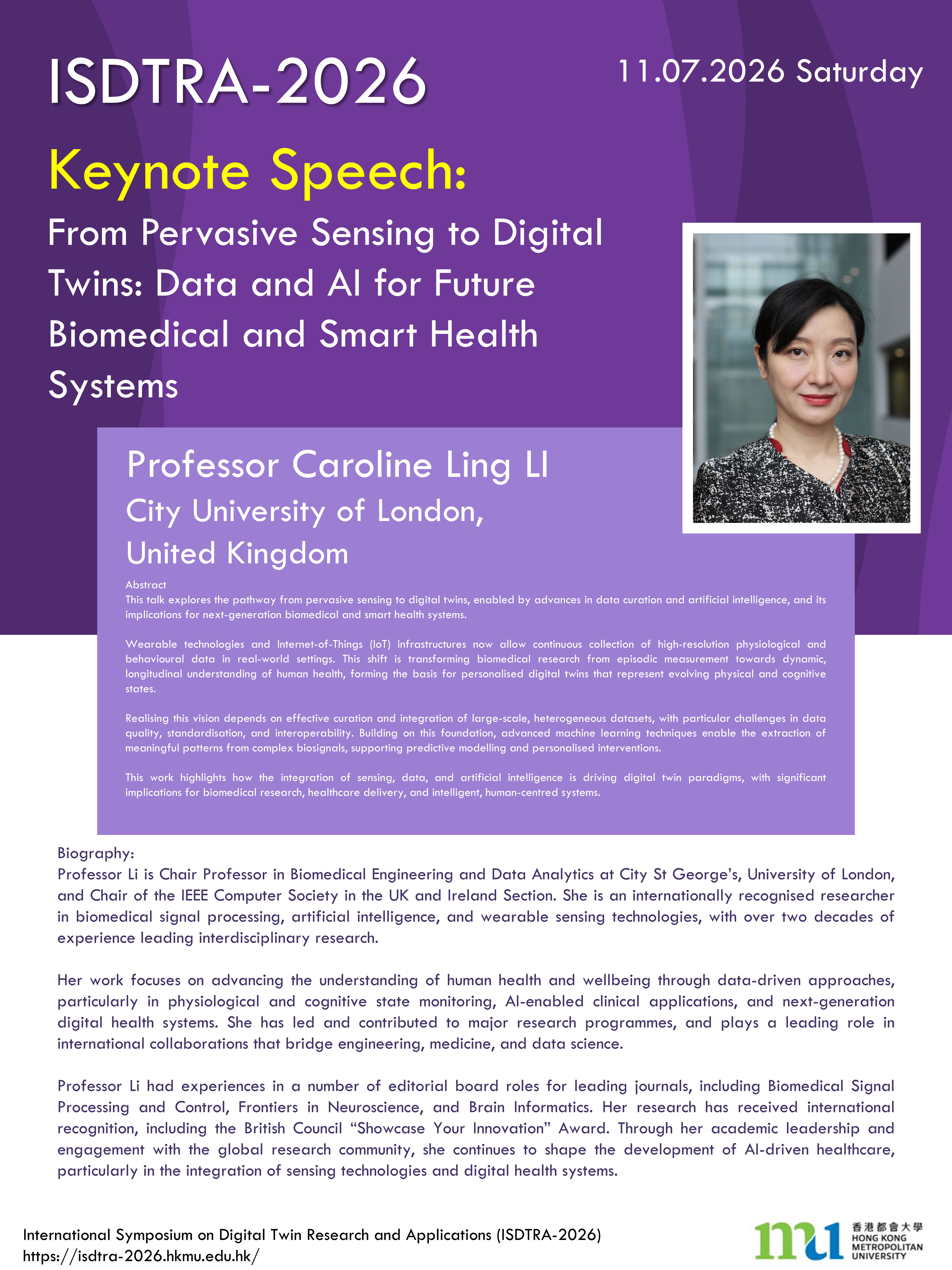
- From Pervasive Sensing to Digital Twins: Data and AI for Future Biomedical and Smart Health Systems
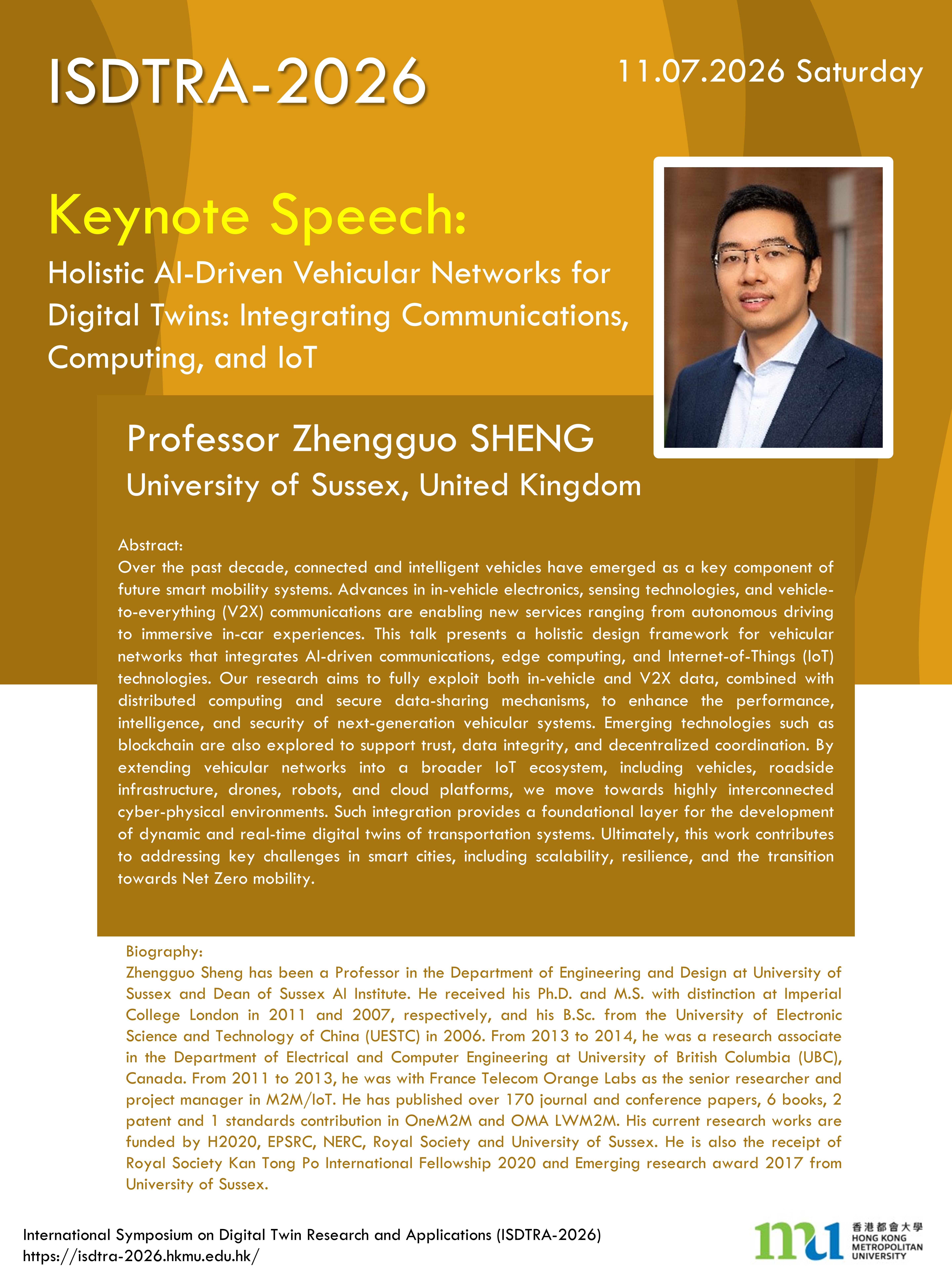
- Holistic AI-Driven Vehicular Networks for Digital Twins: Integrating Communications, Computing, and IoT
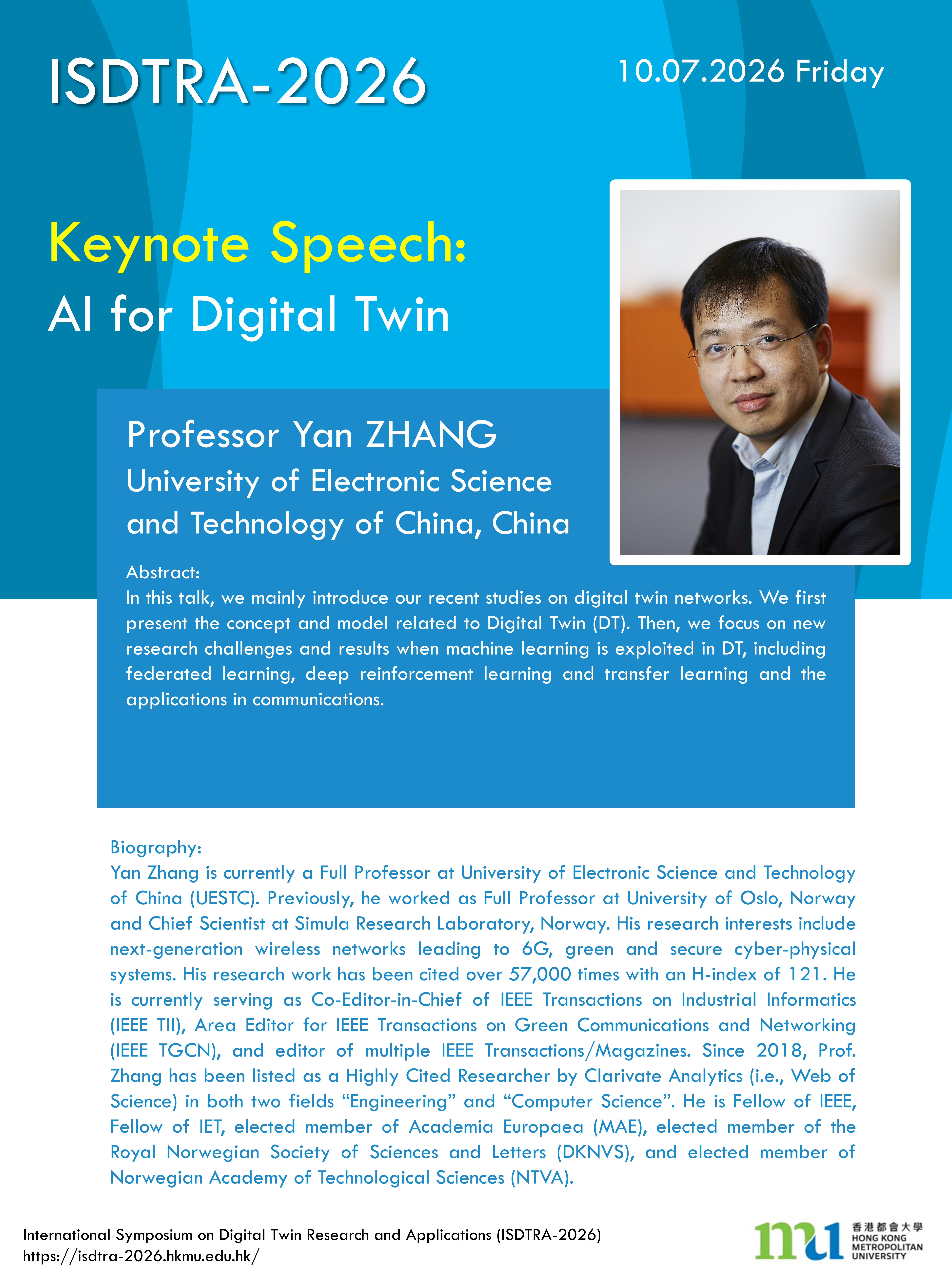
- AI for Digital Twin
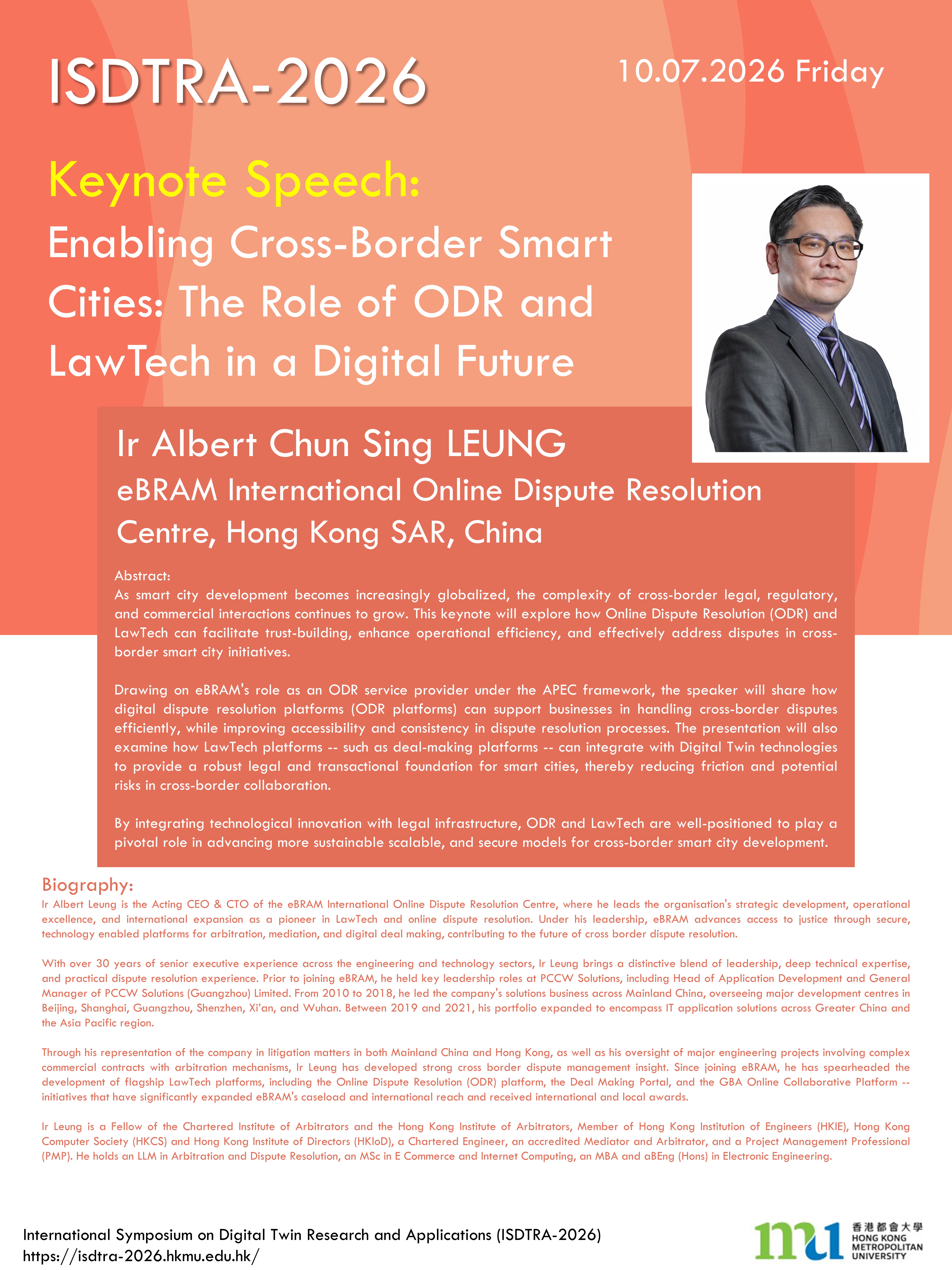
- Enabling Cross-Border Smart Cities: The Role of ODR and LawTech in a Digital Future
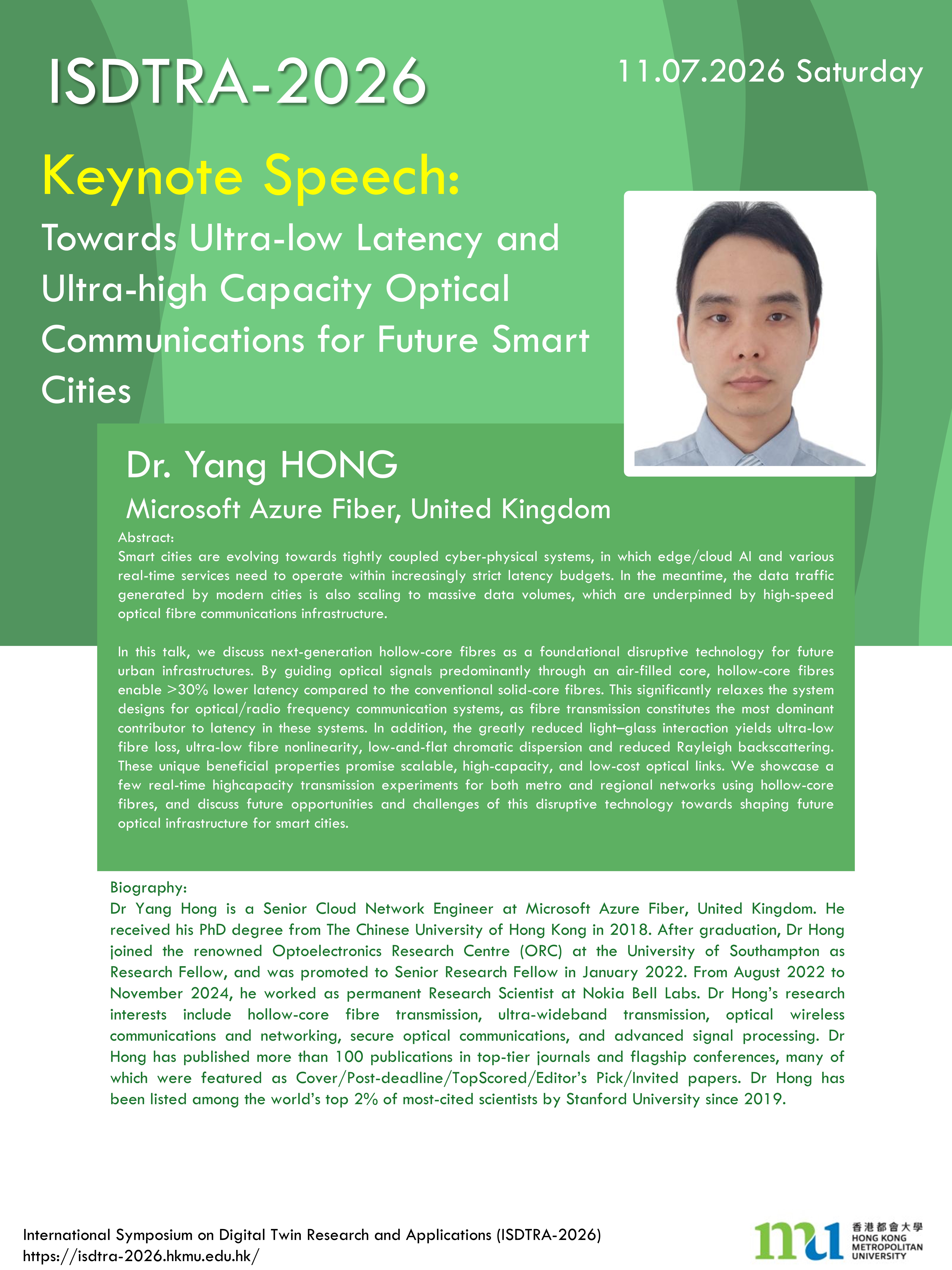
- Towards Ultra-low Latency and Ultra-high Capacity Optical Communications for Future Smart Cities
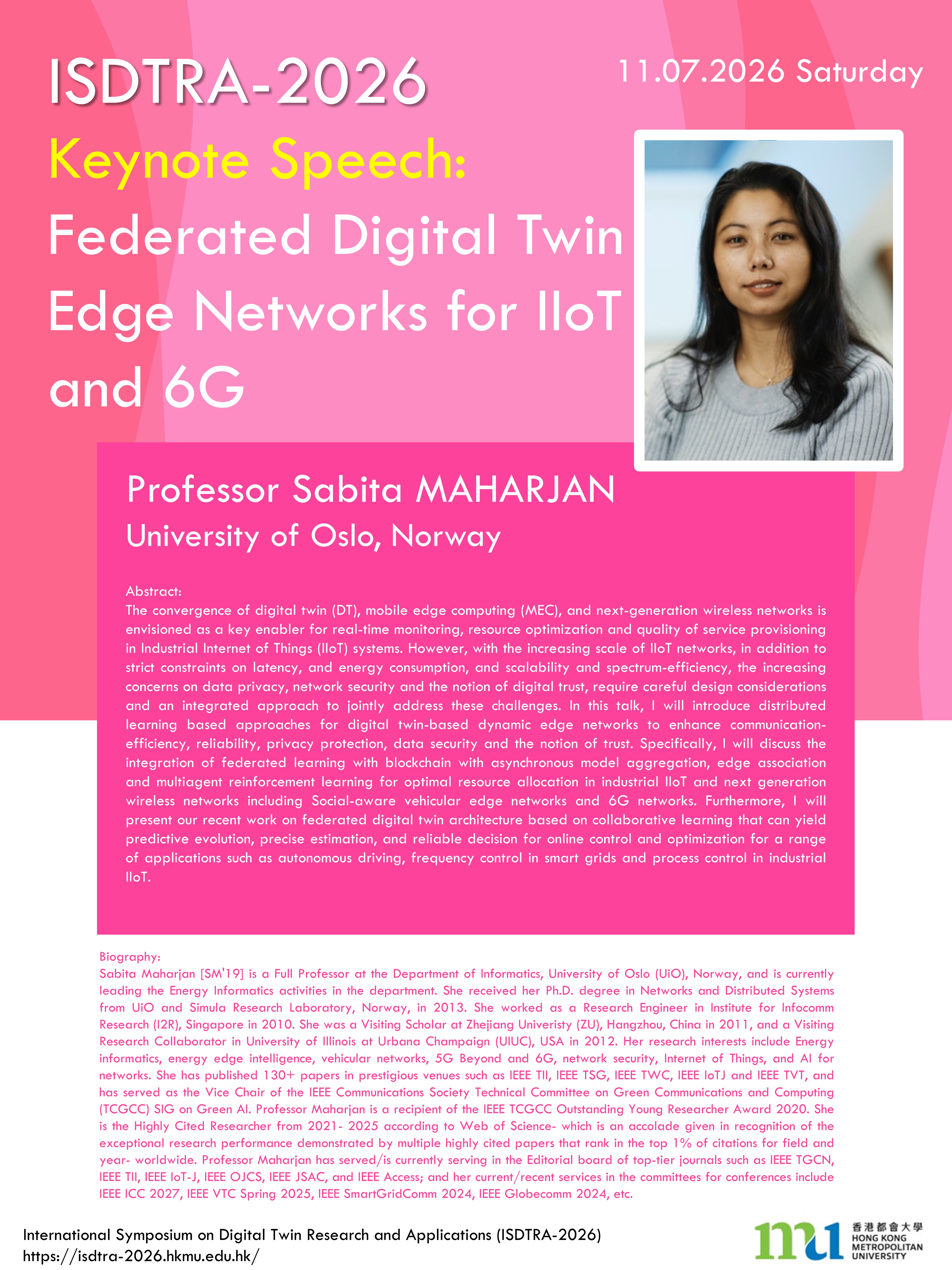
- Federated Digital Twin Edge Networks for IIoT and 6G
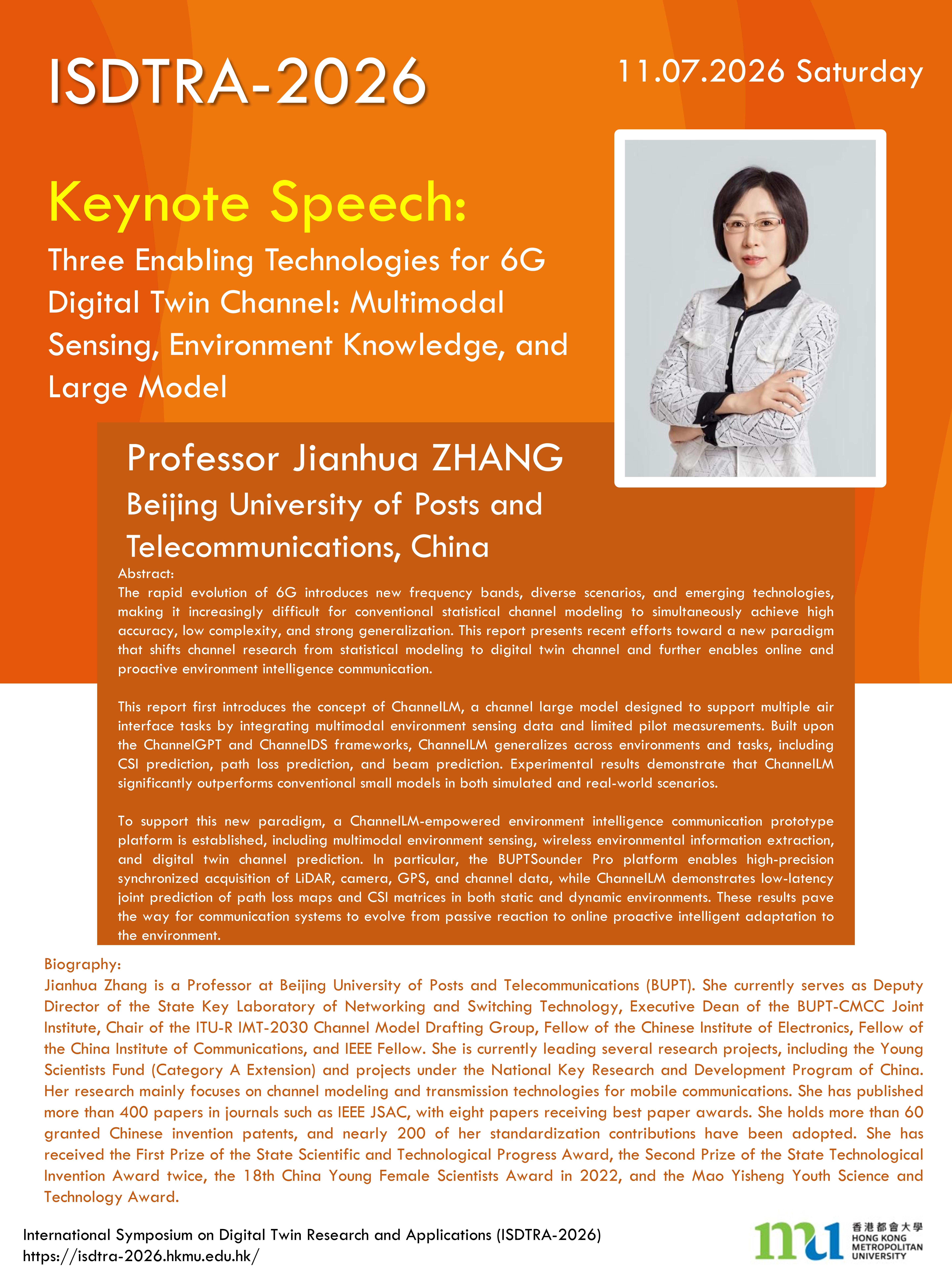
- Three Enabling Technologies for 6G Digital Twin Channel: Multimodal Sensing, Environment Knowledge, and Large Model
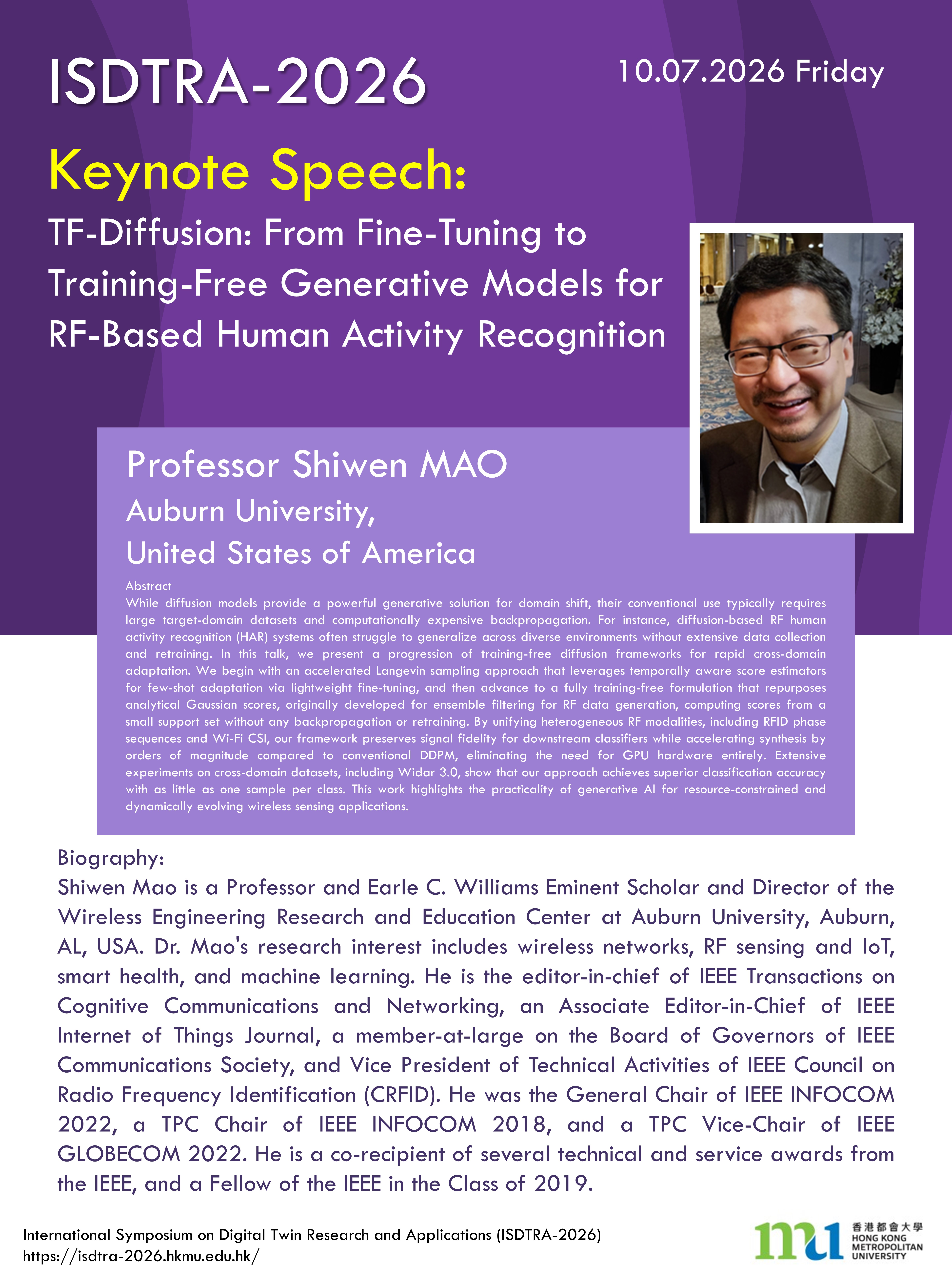
- TF-Diffusion: From Fine-Tuning to Training-Free Generative Models for RF-Based Human Activity Recognition
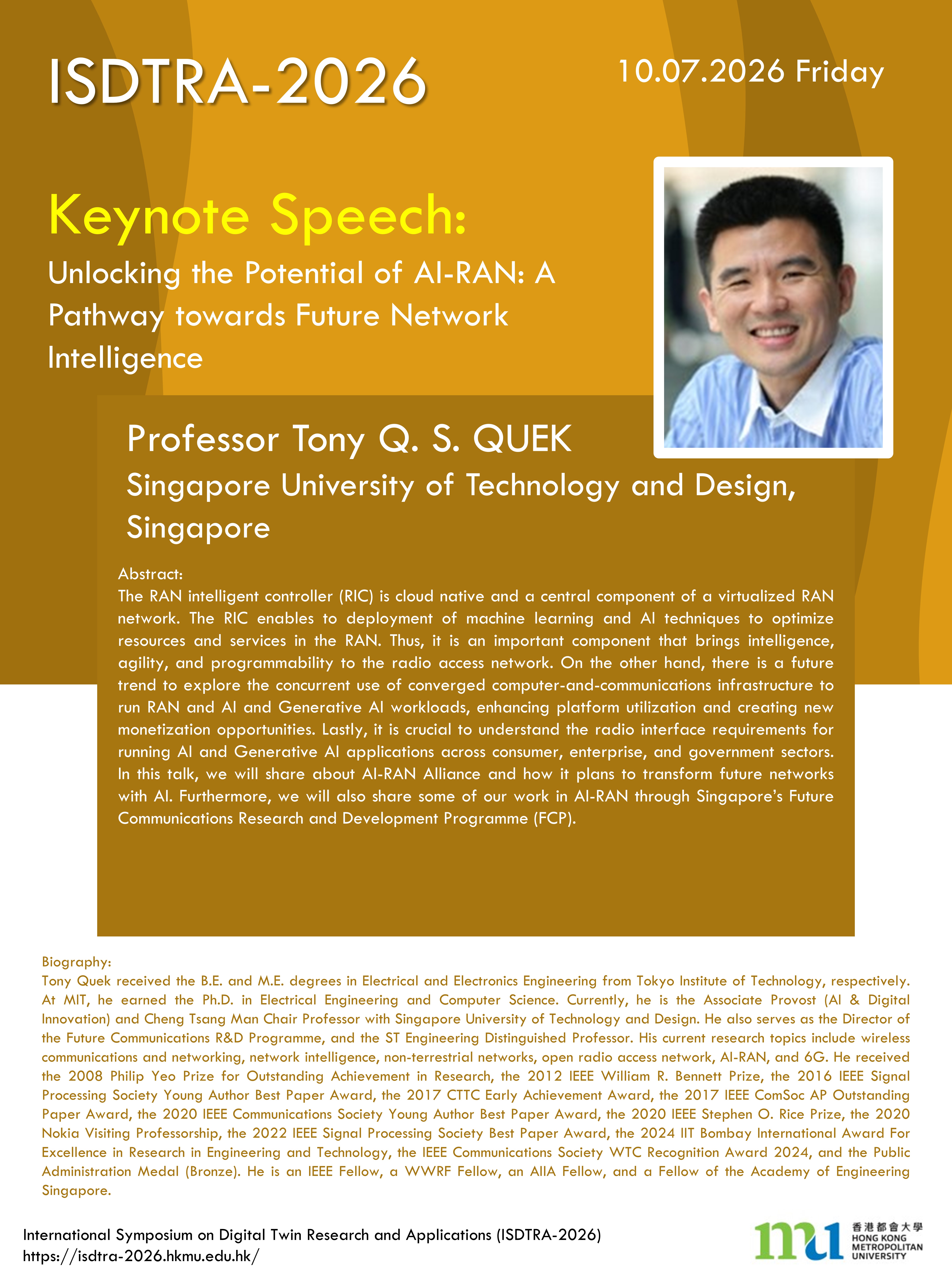
- Unlocking the Potential of AI-RAN: A Pathway towards Future Network Intelligence
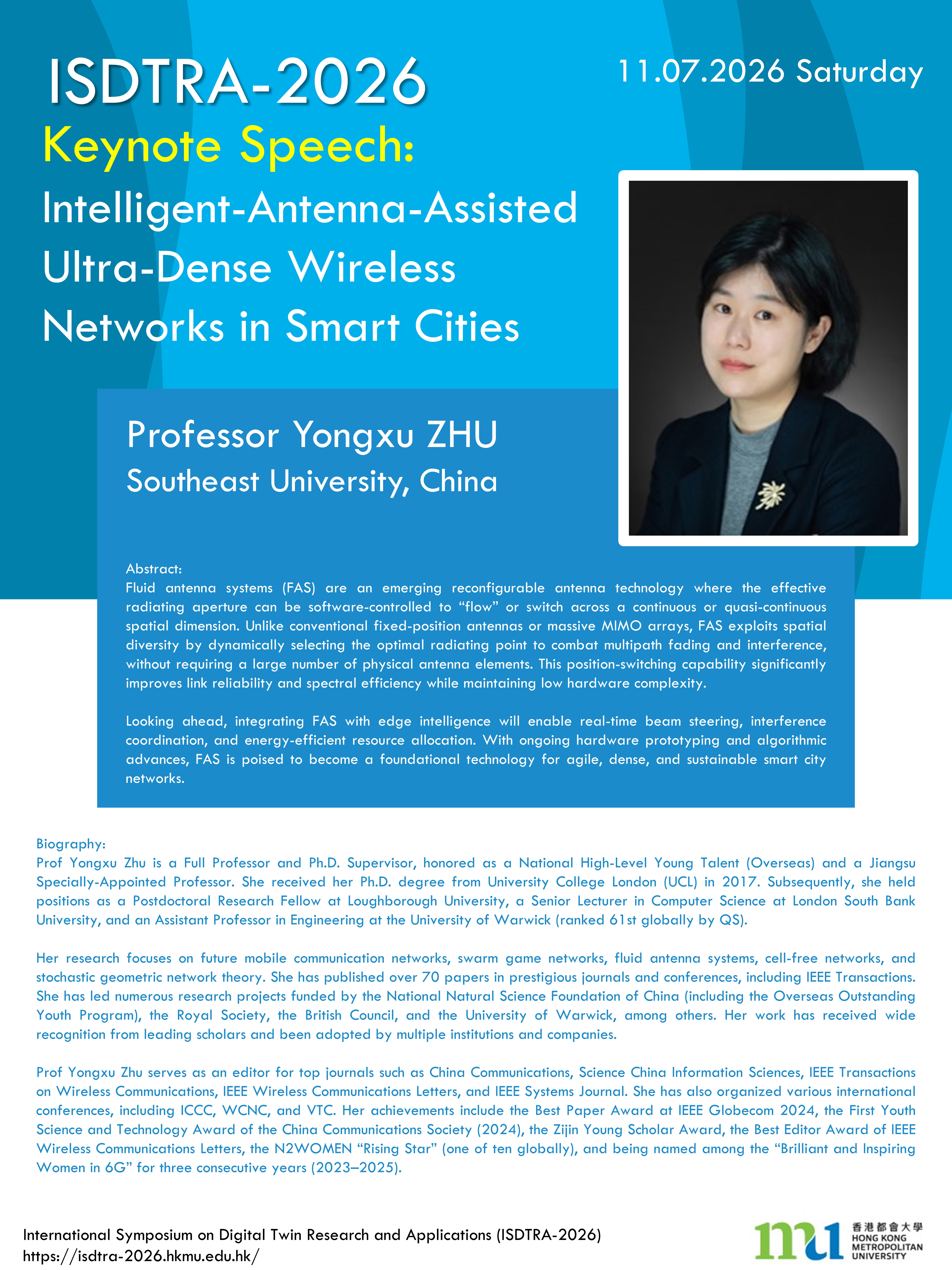
- Intelligent-Antenna-Assisted Ultra-Dense Wireless Networks in Smart Cities
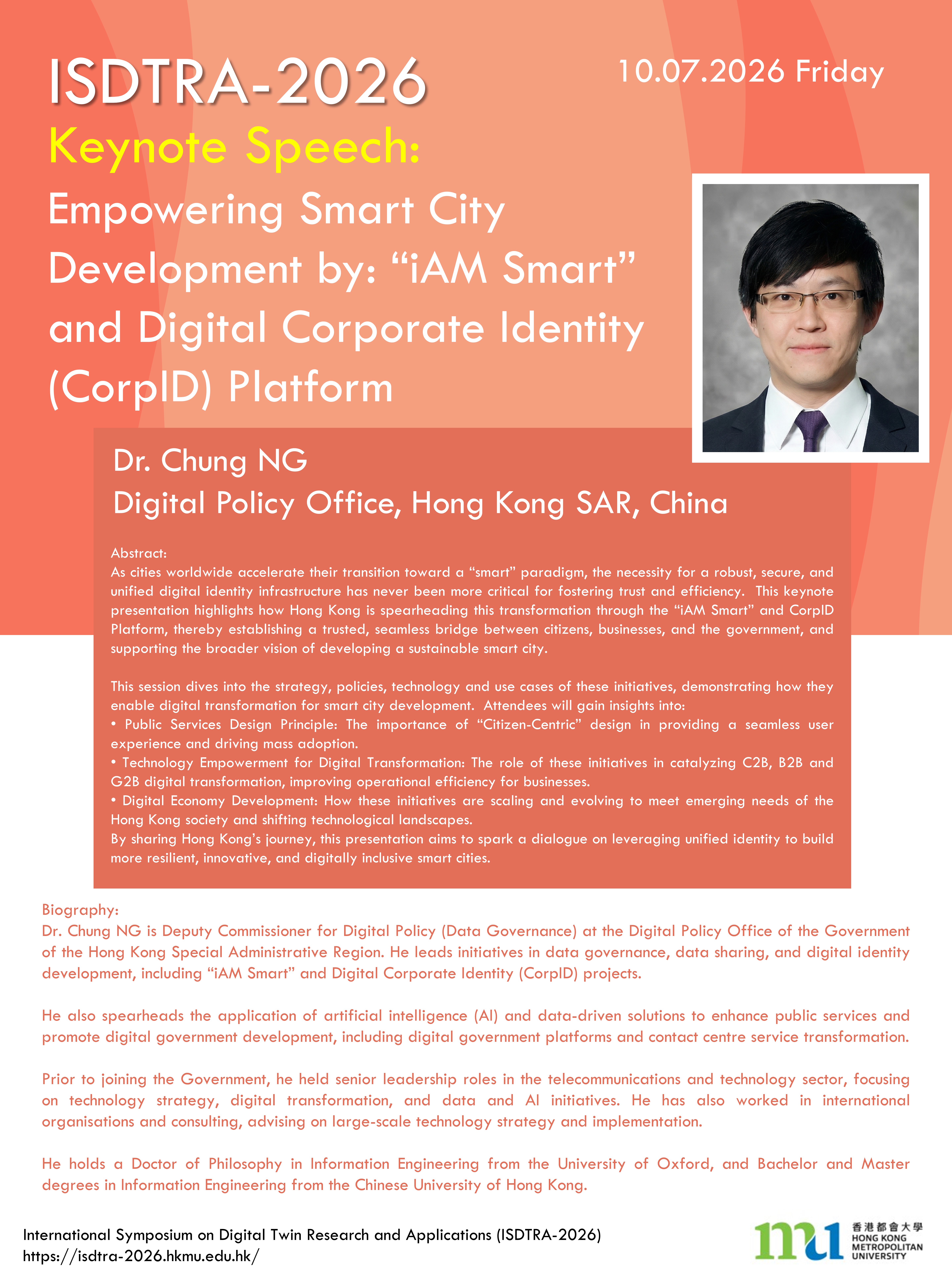
- Empowering Smart City Development by: “iAM Smart” and Digital Corporate Identity (CorpID) Platform
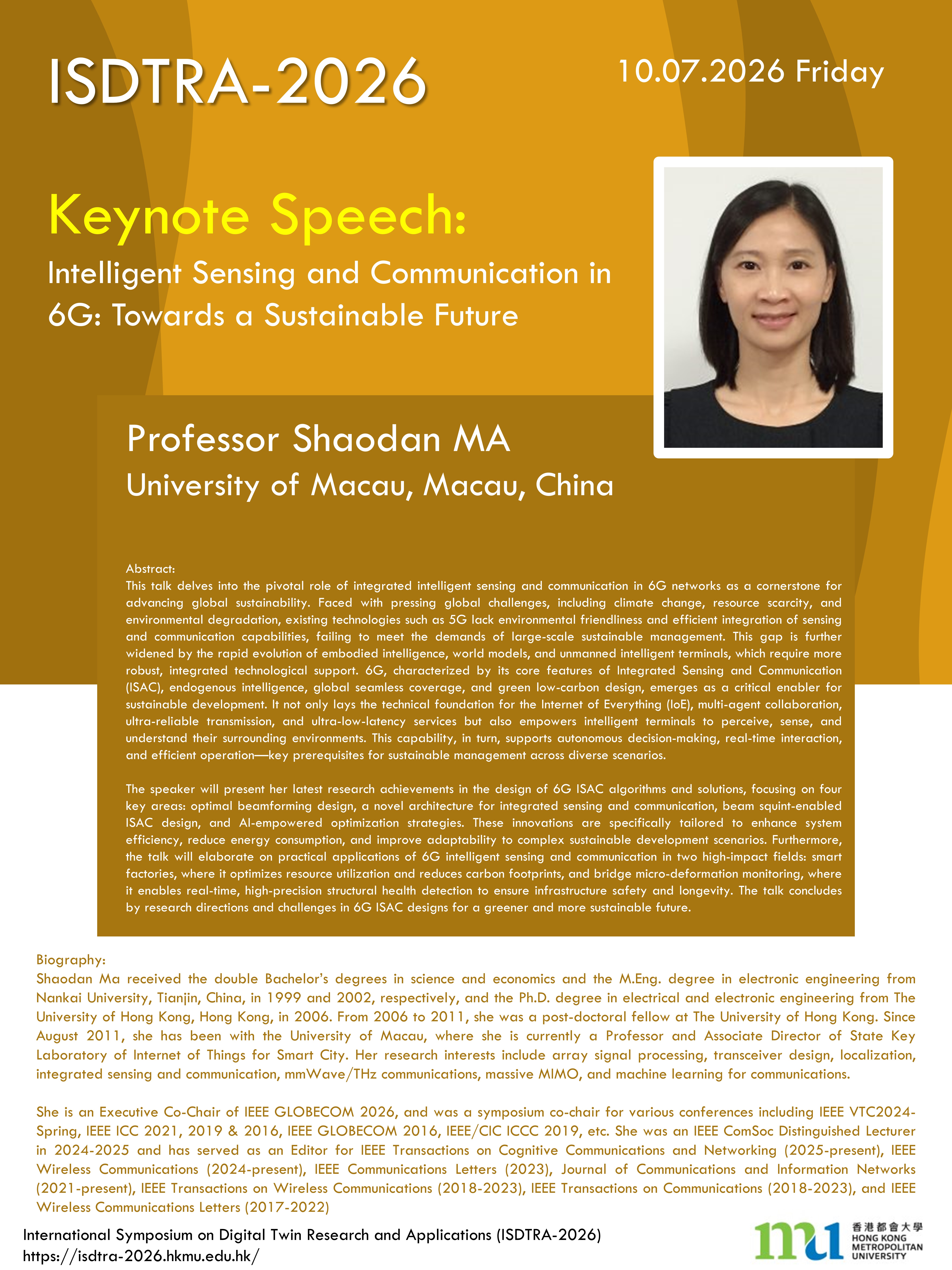
- Intelligent Sensing and Communication in 6G: Towards a Sustainable Future
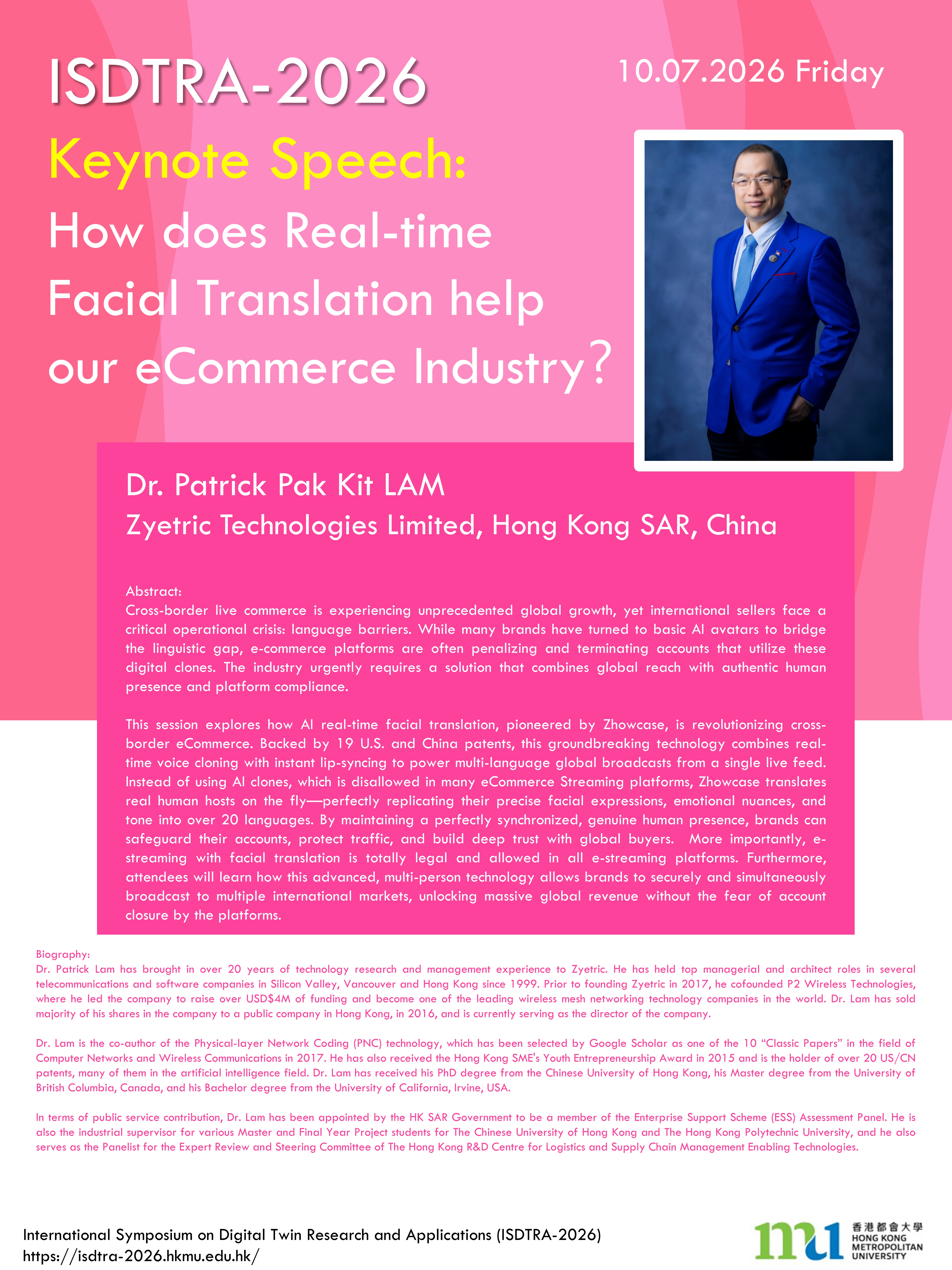
- How does Real-time Facial Translation help our eCommerce Industry?
Keynote Speakers
- Professor Kin K. LEUNG, Imperial College London, United Kingdom
- Professor Caroline Ling LI, City University of London, United Kingdom
- Professor Zhengguo SHENG, University of Sussex, United Kingdom
- Professor Yan ZHANG, University of Electronic Science and Technology of China, China
- Ir Albert Chun Sing LEUNG, eBRAM International Online Dispute Resolution Centre, Hong Kong SAR, China
- Dr. Yang HONG, Microsoft Azure Fiber, United Kingdom
- Professor Sabita MAHARJAN, University of Oslo, Norway
- Professor Jianhua ZHANG, Beijing University of Posts and Telecommunications, China
- Professor Shiwen MAO, Auburn University, United States of America
- Professor Tony Q. S. QUEK, Singapore University of Technology and Design, Singapore
- Professor Yongxu ZHU, Southeast University, China
- Dr. Chung NG, Digital Policy Office, Hong Kong SAR, China
- Professor Shaodan MA, University of Macau, Macau, China
- Mr. Dennis WONG, Hong Kong Telecom, Hong Kong SAR, China
- Dr. Patrick Pak Kit LAM, Zyetric Technologies Limited, Hong Kong SAR, China